Wrexham Council Unveils £60m Solar Power Housing Scheme
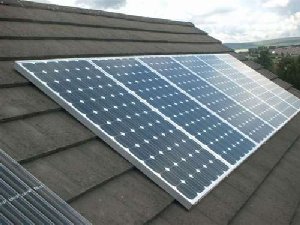
Wrexham Council has announced a £60million scheme to fit 3,000 of its social houses with solar photovoltaic (PV) panels.
The plans are aimed at cutting residents’ carbon footprint and energy bills and form a key part of the council’s wider carbon reduction strategy.
The panels will be retrofitted on existing housing stock later this year with the project due for completion by March 2012.
The scheme, which is expected to save up to 3000 tonnes of CO2 a year, will provide subsidised green power to thousands of Wrexham’s tenants.
Wrexham Council has awarded the project to social housing regeneration specialist Forrest, which is the latest in a string of new orders for the company’s recently launched environmental services division Forrest Green and the panels will be supplied by local manufacturer, Sharp Solar.
Dr Helen Paterson, Chief Executive of Wrexham County Borough Council, said:
“This is a hugely significant project for the Council, with an estimated overall value in the region of £60m. Such investment demonstrates our commitment to reduce carbon emissions and energy use, whilst also tackling fuel poverty.
“The added benefit of this project is the income that will be generated by taking advantage of the government backed Feed in Tariff scheme. We look forward to working with our partners Sharp Solar and Forrest, and hope to maximise the benefits afforded by this flagship project.”
Lee McCarren, Chief Executive of Forrest, added:
“This is a truly landmark project and we’re looking forward to delivering one of the UK’s largest ever social housing solar PV projects.
“The partnership led approach between Wrexham Council, Sharp Solar and Forrest will help to secure and create new jobs and apprenticeships for the local area.
“It’s an agreement which typifies our collaborative approach to delivering work that aims to support regional economies and the breadth of our sustainability services.”
Andrew Lee, International Head of Sales for Sharp Solar said:
“This kind of project represents the spirit of the feed in tariff and demonstrates exactly what it was set-up to achieve.
“It is an example of how intelligent investment in solar PV can create benefits over and above carbon reductions.
“This project will create employment and help to cut tenants fuel bills and putting money back in their pocket at a time when it is most needed.”
The move follows recent news that solar panels are the most popular way of generating renewable power, accounting for 75% of feed-in tariff scheme payments, according to AEA.
So far, more than 44,000 solar installations have been registered for the FIT, with small domestic systems making up the majority (38,300).
Spotted something? Got a story? Email [email protected]